

Aesthetics aren’t the only design aspect consider in cycling shoes
Let’s get this frequently misunderstood and quite frankly, unhealthy and incorrect idea out of the way before we go into detail about cycling shoe fit. Fundamentally, narrow cycling shoes do not produce more power. What they can produce is more pain, discomfort, hotspots, bunions and long-term damage to your feet. Yes, instead of that much sought after power you can find that an excessively tight or cramped cycling shoe fit restricts blood flow, causes nerve compression, and leads to pain or numbness that ultimately reduces your cycling efficiency and power output.
Why Narrow Shoes Hurt Performance
- Nerve and Blood Restriction: A tight-fitting or narrow cycling shoe may cramp the forefoot and could collapse the metatarsal arch, pinching nerves and blocking blood flow, which in turn then causes hot spots and numbness. Something that we’ve spoken about at length on many occasions.
- Power Leaks: Pain, discomfort and restricted foot mechanics can disrupt the smooth kinetic chain needed for an effective pedal stroke. That’s why the best bike fitters such as world-regarded expert Julian Wall always start off their detailed bike fit sessions with your feet.
- Stiffness vs. Width: While a stiff sole helps transfer power, the width of the toe box does not need to be constricted to achieve that stiffness. The stability of the shoe and how it fastens to the pedal and moves in unison with the rotation will help towards a smooth pedal action and maximum power transfer.

Finding a better fit - Natural toe splay
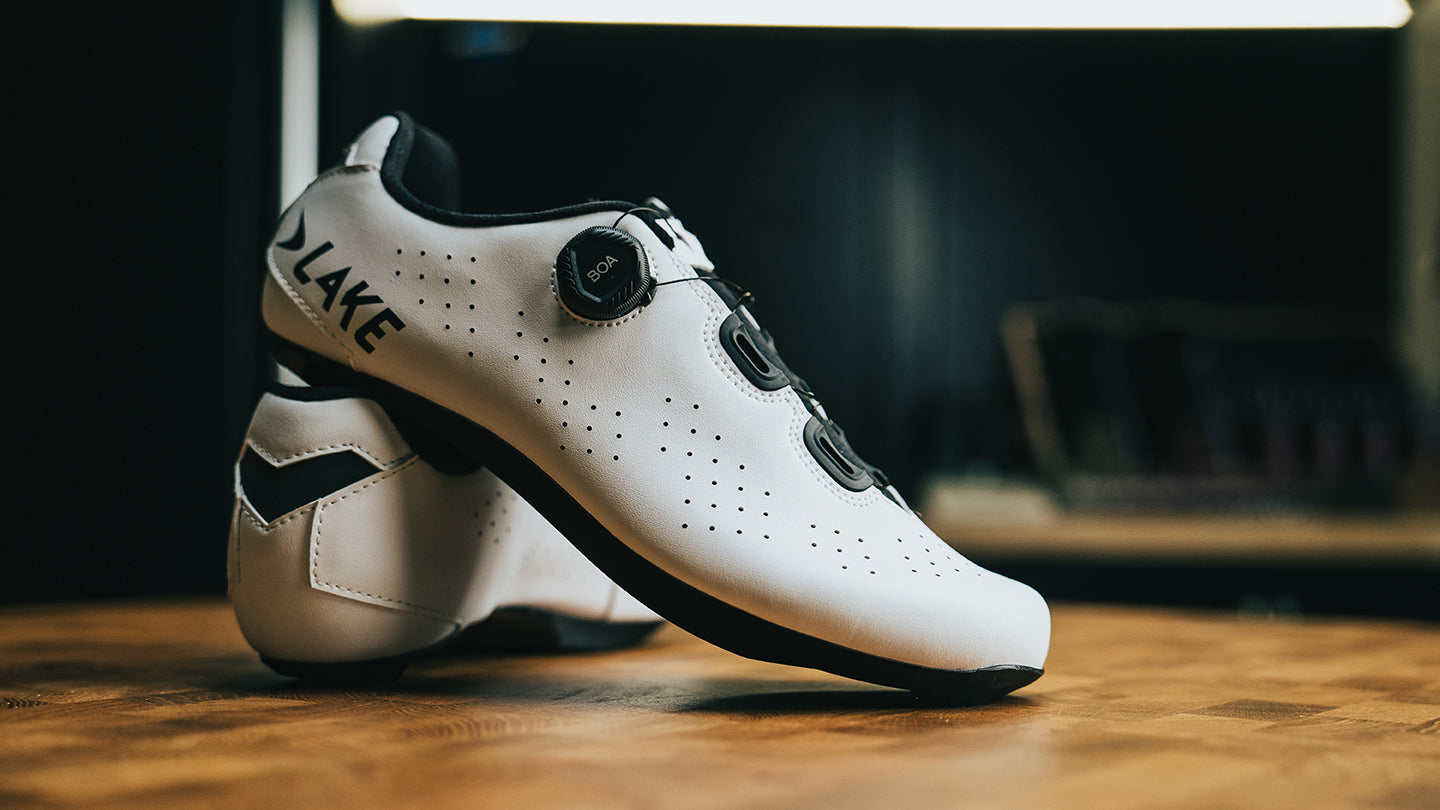
At Lake, we’ve been leading the cycling shoe industry in wider and more comfortable cycling shoes for over 40 years. Our latest range of cycling shoes has a focus on natural foot splay and real-world comfort. Take our rider favourite CX239 road cycling shoe, built on our legendary Competition Last. With a profile specifically designed for very high-cadence riding and higher pressure, our Competition last features a more curved profile than the Sport last. The Competition Last also features a larger toe box and a tighter heel cup area than the Comfort Plus Last and comes with slightly more overall volume than our Sport Last. It’s an exceptionally secure cycling shoe, while having a slightly wider ball girth to allow the foot to expand under high pedalling pressures.
This new evolution in cycling shoe comfort and performance comes with an integrated tongue to the medial panel of the upper for a firmer foot hold, ensuring that power is maximized into forward momentum through improved stability. It also has a fiberglass reinforced internal heel counter, creating a more stable heel hold, and has more spacing between the two BOA® dials to give greater zone adjustment to the forefoot area. It takes one of our favourite cycling shoes to a whole new level of comfort, fit and performance, with modern styling as standard. The focus is on comfort, performance and style in equal and balanced measure. It’s a cycling shoe designed to help you to find that perfect ride and to wrap your feet in comfort all day long.
When we designed the CX239 we looked at every single detail to address foot discomfort, because every Lake cycling shoe is an ambassador for our innovation and expertise.

Avoiding big toe pain in tight-fitting cycling shoes
Lots of cyclists find that they experience pain when wearing narrow cycling shoes, due to the hallux (big toe joint) not having the right amount of space within the toe box. Fundamentally, the right fit requires a wide enough toe box to prevent lateral compression. This can be extremely painful if you have a bunion, or if your forefoot flares, as chronic big toe joint pressure from too narrow cycling shoes can lead to hot spots, numbness, and accelerated joint pain – all issues that we’ve shared with you at length previously.
Key Hallux fit factors
- Toe Box Width: Ensure your big toe joint sits naturally within the toe box, and isn’t being forced inward, keeping within 5mm of the edge of the sole platform.
- No Sizing Up: This is a big issue and one which too many people have tried – and failed – and which simply leads to continued pain and wasted costs. Do not buy a longer shoe just to get width; doing so misaligns your cleat position forward, aggravating forefoot pressure.
- Volume and Closure: Laces or BOA closure systems allow you to loosen the forefoot area independently, whilst enabling you to keep the heel stable.
That annoying and painful big toe pain during cycling is avoidable if you take the right steps – pardon the pun. Yes, it can be caused by an excessively narrow toe box; but it could also be due to cleats being positioned too far inward, or "toe-dipping" from a saddle that is too high. Ultimately, the answer is to visit one of our Lake specialist shoe fitting partners, and bike fitting experts. Here at Lake, we’ve been helping cyclists to find their own perfect fit for over 40 years. Our latest range of the world’s most comfortable cycling shoes typifies that adherence to finding the perfect ride for all cyclists. There’s a clear focus on the natural foot shape, and in wrapping your feet in a way that matches how you choose to ride. From the pro peloton to the leisure cyclist enjoying coffee on the Chicago boardwalk, Lake has the cycling shoes for you, with comfort and fit always the priority.
La rigidez de las zapatillas de ciclismo explicada
How the pro peloton influences cycling