

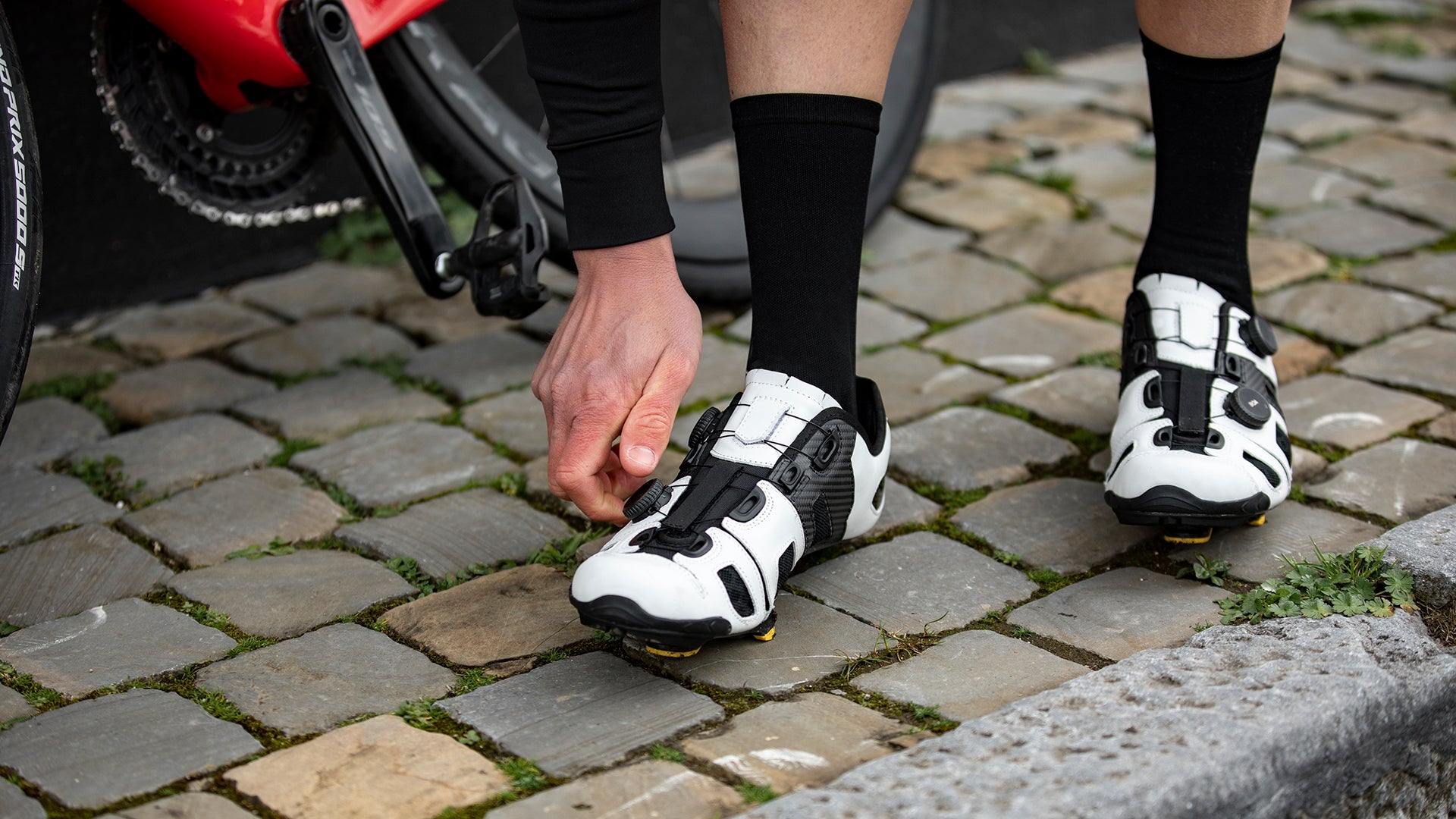
Ajuste de la bicicleta y los 3 puntos de contacto
Fundamentalmente, todos somos diferentes. Pensamos de manera diferente, nos comportamos de manera diferente, y nuestros cuerpos son diferentes, al igual que la forma en que los usamos al andar en bicicleta. En última instancia, no existe un enfoque de "talla única" para el ciclismo, y comprar una bicicleta o un par de zapatillas de ciclismo listos para usar en línea, sin conocer con precisión tus necesidades individuales, simplemente no funcionará. Y, en algún momento en el futuro, tu cuerpo te dirá que te equivocaste, a través del dolor y la incomodidad al ciclismo. Pedir zapatillas de ciclismo, o incluso una bicicleta, como último recurso, y sin conocer con precisión tu talla real, largo, ancho y volumen del pie, simplemente no te llevará a la comodidad. Necesitas que te midan los pies correctamente y sentir la zapatilla en el pie, para saber que se adapta a la forma de tus propios pies y que te funcionará bien, y lo mismo ocurre con una bicicleta.
Aquí en Lake, trabajamos junto con bike fitters y shoe fitters especialmente capacitados en todo el mundo, para garantizar que los ciclistas tengan la mejor oportunidad de comprar la zapatilla de ciclismo correcta para sus necesidades individuales. En última instancia, verás que hay 3 puntos clave de contacto entre el ciclista y la bicicleta, y los pies son el primero en acertar. A partir de aquí, un bike fitter capacitado analizará cómo funciona tu cuerpo durante cada pedalada y ajustará el resto de la bicicleta de acuerdo con los datos identificados.

CX400Carretera
Zapatilla de carretera con suela de carbono, calidad Lake.
- Carretera
 Encontrando tu lugar en el ciclismo
Asistimos recientemente a una conferencia celebrada en el Reino Unido, donde bike fitters de todo el mundo se reunieron, compartiendo y discutiendo información y hallazgos para mejorar la ejecución del ajuste de bicicletas. Siempre es bueno apoyar tales iniciativas, especialmente cuando tienen un impacto positivo en la salud de los pies de los ciclistas.
Fundamentalmente, un bike fit busca optimizar los 3 puntos principales de contacto entre el ciclista y la bicicleta: los pies y los pedales; la pelvis y el sillín; y finalmente, el manillar y cómo esto afecta tu posición y comodidad en otras partes. Si pueden hacerte sentir cómodo, ese es el primer paso para maximizar el rendimiento. Una vez que te sientes cómodo, eres más capaz de aumentar la potencia y la eficiencia, al tiempo que reduces el riesgo de lesiones. Los hombros, la espalda, la pelvis, las rodillas y los pies pueden sufrir innecesariamente debido a unas zapatillas de ciclismo mal ajustadas y una bicicleta mal ajustada.
Medir los pies correctamente, ajustarlos con las zapatillas de ciclismo adecuadas y luego alinearlos en la bicicleta es fundamental para maximizar la comodidad. En última instancia, tus pies proporcionan la base para esa importantísima transferencia de potencia. Hemos hablado recientemente de la posición de la cala en detalle; destacando que las calas deben estar anguladas para permitir una posición natural y cómoda del pie, evitando torsiones o tensiones en las rodillas y las caderas. Y, además, una zapatilla de ciclismo con suela rígida y bien ajustada mantendrá el pie estable y ayudará a distribuir la presión por el pie a medida que realizas constantemente el movimiento de pedaleo.
Tener los pies cómodos y ahora operando con tu acción de pedaleo natural e ininterrumpida, también garantizará menos dolor e incomodidad en la parte superior del cuerpo. Para ayudarte a lograr esto, Lake ha creado varias hormas de zapatillas diferentes, todas con variantes únicas, para que nuestra variada gama de zapatillas de ciclismo te brinde la mejor oportunidad de adaptar tu propio ajuste y comodidad.
 Alineándote con el confort ciclista
El sillín y el manillar
Los 2 puntos de contacto restantes no son menos importantes, y se cubren en blogs más detallados en nuestro sitio web. El sillín es el área más común de dolor e incomodidad y a menudo es el resultado de una altura o posicionamiento incorrectos. ¿Cuántos ciclistas conocen la altura de su sillín, o el posicionamiento de avance y retroceso? La inclinación del sillín debe ser nivelada para evitar deslizarse hacia adelante, y el ancho del sillín debe relacionarse con el posicionamiento de tus isquiones y no ejercer una presión indebida sobre el tejido blando y las áreas nerviosas.
Los manillares a menudo son una ocurrencia tardía, ya que la gente compra bicicletas ya montadas, solo para darse cuenta de que los manillares tienen un ancho incorrecto. El ancho, en términos básicos, debe coincidir con el ancho de tus hombros. La altura debe elegirse por comodidad, no solo por aerodinámica. Un punto de partida común es tener los manillares 1-2 pulgadas por debajo del sillín para bicicletas de carretera, o incluso más bajos para las carreras. En cuanto al alcance, la distancia a los manillares debe permitir una ligera flexión de los codos para que actúen como suspensión natural. Un sencillo chequeo es poner el codo en la punta del sillín; la punta de los dedos debe apenas tocar el borde de la potencia. Sin embargo, para una verdadera precisión, siempre recomendaríamos una sesión de ajuste de bicicleta por un experto profesionalmente capacitado.
 Tus pies son la base de la comodidad
Lake ha estado diseñando e innovando nuestras zapatillas de ciclismo durante más de 40 años, trabajando con los principales expertos en ajuste de bicicletas del mundo. Seguimos centrándonos en el ajuste y la comodidad, sabiendo que esta es la verdadera base para el rendimiento y el disfrute en la bicicleta. Sea cual sea tu nivel como ciclista, y sea cual sea el estilo de ciclismo que practiques, hay un par de zapatillas de ciclismo Lake que se adaptarán a ti y envolverán tus pies únicos en ese equilibrio perfecto entre comodidad, rendimiento y estilo, en ese orden.
¿No es hora de que mires nuestra última gama de zapatillas de ciclismo, incluyendo nuestras nuevas Lake CX400 y CX178, y pedalees hacia el futuro con Lake a tu lado, y en tus pies?

CX178Carretera
Zapatilla de carretera con suela de carbono, calidad Lake.
- Carretera
Las nuevas zapatillas de ciclismo de carretera CX400 y CX400L
Conozca al equipo: Megan Monk, embajadora del lago