

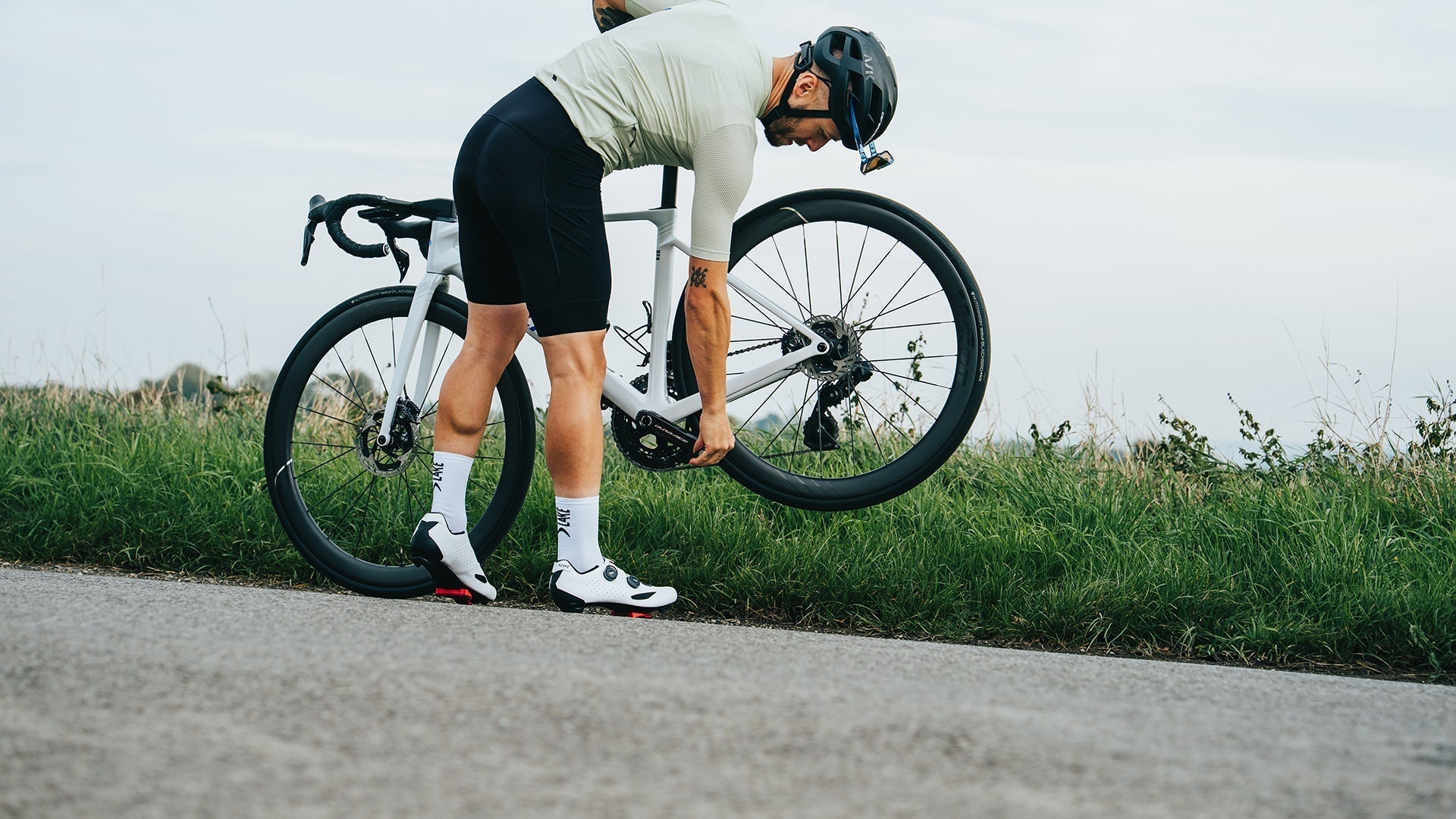
La mayoría de los ciclistas dedican más tiempo a investigar su próxima bici que a elegir las zapatillas que los conectan con ella. Es un error, porque la zapatilla es el punto donde tu cuerpo se encuentra con la máquina. Es la interfaz por la que debe pasar cada vatio de potencia que generas antes de llegar al pedal. Si te equivocas, pasarás tus salidas gestionando molestias en lugar de pedalear bien.
Elegir zapatillas de ciclismo tiene más matices de lo que parece. No hay una única respuesta correcta. La zapatilla adecuada depende de tu disciplina, tu sistema de pedales, la forma de tu pie, la distancia que recorres y cuánto priorizas el rendimiento frente a la comodidad al caminar. Esta guía repasa cada una de esas decisiones en orden, para que llegues a una conclusión clara en lugar de a una suposición.
Lake Cycling fabrica zapatillas de ciclismo de alto rendimiento desde 1982, y lo único que no ha cambiado en todo este tiempo es el principio fundamental: el ajuste es la base. Todo lo demás, incluidos los materiales de la suela, los sistemas de cierre y la compatibilidad de las calas, solo rinde al máximo cuando la zapatilla ajusta bien desde el principio.
¿Qué tipo de zapatilla de ciclismo necesitas?
La primera pregunta no va de marca ni de presupuesto, sino del tipo de ciclismo que practicas. Las zapatillas de ciclismo se diseñan en torno a disciplinas concretas, y las diferencias entre ellas no son cosméticas. Reflejan diferencias reales en prioridades de rendimiento, sistemas de pedales y exigencias sobre la zapatilla.
Zapatillas de carretera
Las zapatillas de carretera se construyen en torno al anclaje de cala de 3 tornillos y una suela lisa, a menudo de fibra de carbono, que sitúa la cala a ras de la suela exterior. Están diseñadas para la eficiencia: cada elemento de la zapatilla está optimizado para minimizar la pérdida de energía entre el pie y el pedal. Las zapatillas de carretera suelen tener suelas rígidas, empeines ceñidos y cierres que permiten un ajuste fino en marcha. No están hechas para caminar, y tampoco lo pretenden. Cuando estás enganchado y pedaleando, rinden mejor que cualquier otro tipo. Al bajarte de la bici, notarás la diferencia. Son ideales para ciclistas de carretera comprometidos, participantes de gran fondo, corredores de critérium y cualquiera cuyas salidas empiezan y terminan en la bici, con un tiempo mínimo a pie.
Zapatillas de MTB
Las zapatillas de MTB usan el anclaje de cala de 2 tornillos e incorporan suelas exteriores con tacos de goma que te permiten caminar, cargar la bici o superar terreno técnico a pie sin resbalar. La cala encastrada queda dentro de la suela en lugar de sobresalir por debajo, lo que hace que caminar sea práctico y seguro. El empeine suele ser más robusto, construido para soportar la abrasión de rocas, raíces y roces accidentales.
Las zapatillas de MTB encajan con ciclistas de montaña, corredores de ciclocross, aficionados al bikepacking y quienes van al trabajo en bici y necesitan caminar cómodamente con sus zapatillas.
Zapatillas de gravel
Las zapatillas de gravel ocupan el espacio entre carretera y MTB. Usan el sistema de cala de 2 tornillos para poder caminar y suelen incorporar goma en puntera y talón para tener agarre cuando estás fuera de la bici. La suela es más rígida que la de una zapatilla de calle, pero a veces algo más flexible que la de una zapatilla pura de carretera, lo que ayuda en terrenos que exigen breves tramos a pie. Muchos ciclistas de gravel valoran esa versatilidad: rigidez suficiente para largos tramos de asfalto y agarre y protección de cala suficientes para los tramos sin asfaltar.
Zapatillas de triatlón
Las zapatillas de triatlón están pensadas para la velocidad en las transiciones. Se abren mucho, se cierran rápido y suelen incorporar cordones rápidos o correas en lugar de cierres de rueda. El forro suele estar diseñado para usarse sin calcetines. El objetivo es reducir el tiempo desde la salida de T1 hasta la máxima potencia, así que cada elemento de la zapatilla está optimizado para entrar rápido y quedar bien sujeto en marcha.
Zapatillas de invierno
Las zapatillas de invierno aíslan tus pies del frío manteniendo al máximo la rigidez y el rendimiento de una zapatilla de ciclismo normal. Usan empeines hidrófugos o impermeables, forros aislantes y sistemas de cierre que funcionan con guantes. Un apunte clave sobre la talla de las zapatillas de invierno: Lake recomienda pedir entre 1 y 1,5 tallas más que tu talla habitual de zapatilla de ciclismo para dejar sitio a calcetines de invierno más gruesos. Si pides tu talla normal y piensas usar calcetines gruesos, el ajuste quedará demasiado apretado.
Sistemas de calas: 2 tornillos vs 3 tornillos
Tu sistema de calas determina con qué pedales son compatibles tus zapatillas, cómo se posiciona tu pie sobre el pedal y con qué facilidad caminas al bajarte de la bici. Los dos sistemas principales son el de 2 tornillos y el de 3 tornillos, y entenderlos es esencial antes de elegir una zapatilla.
3 tornillos (carretera)
El sistema de 3 tornillos es el estándar en carretera. La cala es más grande, queda más cerca de la superficie de la suela y reparte la fuerza de pedaleo sobre una zona de contacto más amplia entre pie y pedal. Esa interfaz más grande es una de las razones por las que las zapatillas de carretera transfieren la potencia con tanta eficiencia: más superficie de contacto significa que la carga se reparte por una mayor parte de tu zona metatarsal. La contrapartida es que la cala sobresale por debajo de la suela, lo que hace que caminar sea torpe e incómodo sobre superficies duras.
2 tornillos (MTB y gravel)
El sistema de 2 tornillos usa una cala más pequeña que queda encastrada en un canal de la suela exterior. Así la cala queda por encima de la superficie de contacto, de modo que al caminar tocan el suelo los tacos de la suela y no la cala. Caminar resulta natural y cómodo. La transferencia de potencia es algo menos directa que con el sistema de 3 tornillos, aunque por debajo del nivel de élite esa diferencia es marginal y no afectará de forma apreciable a tu experiencia.
Entender el float
El float es el grado de rotación que puede hacer tu pie mientras la cala sigue enganchada al pedal. Una cala con más float permite que el talón gire hacia fuera o hacia dentro dentro de un rango antes de que la cala se suelte. Más float reduce la tensión en la articulación de la rodilla al absorber la variación natural de tu pedalada. Menos float da una sensación más fija, que algunos ciclistas prefieren para una entrega de potencia precisa. La mayoría va bien con un float moderado, sobre todo al empezar. Si tienes problemas de rodilla o asimetrías biomecánicas, un especialista en biomecánica puede ayudarte a identificar el rango de float adecuado para tu anatomía.
Materiales de suela: rendimiento vs precio
La suela es la base estructural de una zapatilla de ciclismo. Hace tres cosas: transfiere la potencia del pie al pedal, protege el pie de las vibraciones de la carretera y determina cómo se comporta la zapatilla bajo carga. El material de la suela es el factor que más separa los rangos de precio en el mercado de zapatillas de ciclismo.
Suelas de carbono completo
Las suelas de fibra de carbono ofrecen la mejor relación rigidez-peso de todos los materiales de suela. Bajo la carga del pedaleo se flexionan mínimamente, así que una mayor parte de tu esfuerzo muscular llega a la transmisión en lugar de absorberse y perderse en la flexión de la suela. También reducen la fatiga del pie en salidas largas, porque una plataforma más rígida exige menos trabajo de estabilización al pie. Las suelas de carbono completo son el estándar a nivel de carreras y competición.
Los modelos de carretera de Lake con suela de carbono completo incluyen:
La CX333 usa el sistema de doble suela de carbono de Lake. Sus equivalentes de MTB, las MX333 y MX239, también usan bases de fibra de carbono con recubrimientos de goma pensados para el uso fuera del asfalto.
Suelas de composite de carbono
Las suelas de composite de carbono combinan fibra de carbono con otros materiales para ofrecer una rigidez notable a un coste de fabricación menor. Son más rígidas que el nailon y muy adecuadas para entrenamiento y fondo. La CX201 usa una suela de composite de carbono.
Suelas de composite de nailon
Las suelas de composite de nailon son las más flexibles de los tres niveles. Ofrecen rigidez suficiente para el ciclismo recreativo y son más duraderas en situaciones donde la suela puede flexionarse mucho. La CX190 y la CX178 usan ambas suelas de composite de nailon.
Sistemas de cierre
BOA Li2
La rueda BOA Li2 es el cierre estándar en los modelos de alto rendimiento de carretera y MTB de Lake. Usa un cable de acero inoxidable guiado por un sistema de baja fricción, se tensa girando la rueda en el sentido de las agujas del reloj y se libera al instante tirando de ella hacia fuera. La mayoría de los modelos de alto rendimiento de Lake montan una rueda BOA Li2 única o una configuración doble BOA Li2. Las ruedas dobles permiten ajustar de forma independiente el antepié y el mediopié, algo importante para ciclistas con antepié ancho, empeine alto o pies que se hinchan.
BOA L6
La BOA L6 es una rueda más ligera que se monta en los modelos deportivos de Lake. Funciona igual que la Li2, pero está pensada para usos menos intensivos. La encontrarás en la CX190 (doble rueda L6) y la CX178 (rueda L6 única).
BOA M4
La BOA M4 está diseñada específicamente para usarse con guantes de invierno. La rueda es más grande y más fácil de agarrar con dedos gruesos. Aparece en los modelos de invierno de Lake, donde poder ajustar las zapatillas en marcha con guantes aislantes es una necesidad práctica real.
Speed Lace y Power Strap
La zapatilla de triatlón TX224 usa un cierre de cordones rápidos combinado con una única correa de velcro, pensados para la velocidad en T1 y la sujeción una vez en marcha.
El factor más importante: el ajuste
El material de la suela, el sistema de calas y el cierre importan. Pero ninguno cumple su función si la zapatilla no se ajusta bien a tu pie. El ajuste de una zapatilla de ciclismo lo determina la horma (el last): la forma tridimensional en torno a la cual se construye la zapatilla. La horma define la forma de la puntera, la anchura del antepié, la altura del empeine, la geometría del contrafuerte del talón y el volumen total. Lake fabrica seis hormas distintas. Si quieres profundizar, lee la guía completa de hormas de zapatillas de ciclismo.
Race Last
Puntera estrecha y talón ceñido. Diseñada para la competición. Encaja con ciclistas de antepié más estrecho y empeine estándar o bajo. Modelos de carretera Lake:
Competition Last
Puntera más amplia que la del Race Last, talón ceñido. Más espacio en el antepié sin renunciar al control del talón. Modelos de carretera:
Sport Last
Perfil de ajuste equilibrado y tradicional. La CX190 se construye sobre la Sport Last, en Regular y Wide.
Sport Comfort Last
Puntera más ancha que favorece la apertura natural de los dedos. La CX178 se construye sobre la Sport Comfort Last, disponible en Regular y Wide.
Comfort Plus Last
La plataforma de antepié más generosa de la gama de carretera de Lake. Diseñada para pies con mucho volumen y ciclistas con una hinchazón importante. La CX201 usa la Comfort Plus Last y solo está disponible en talla Regular: ya es ancha de por sí por diseño.
Winter Extreme Last
Diseñada para acoger el volumen extra de calcetines de invierno más gruesos. Se usa en los modelos de invierno de Lake. Lake recomienda subir entre 1 y 1,5 tallas en zapatillas de invierno.
Problemas de ajuste habituales y soluciones
Entumecimiento del antepié
Suele significar que la zapatilla es demasiado estrecha en el antepié, que la puntera es demasiado baja o que el cierre está demasiado apretado. Comprueba primero el cierre. Si el entumecimiento persiste, la zapatilla probablemente está construida sobre una horma que no encaja con la anchura de tu pie. Pasar a la Competition Last, la Comfort Plus Last o a una versión Wide suele resolverlo.
Puntos de presión
Un punto de presión localizado sobre una prominencia ósea. El empeine segmentado de la CX242 Wide está diseñado para flexionarse de forma independiente alrededor de los puntos de presión. Los contrafuertes de talón termomoldeables resuelven los puntos de presión en la parte trasera del pie.
Talón que se levanta
Si el talón se levanta durante la fase de subida del pedaleo, el contrafuerte es demasiado grande o la zapatilla tiene demasiado volumen. La Race Last y la Competition Last tienen taloneras ceñidas por diseño.
Dedos magullados
Indica que los dedos tocan la parte delantera de la zapatilla bajo carga. Comprueba la longitud de la zapatilla frente a la medida de tu pie y mejora la sujeción del talón.
Presión del empeine
La zapatilla no tiene volumen suficiente para la altura de tu pie: es un problema de horma, no de cierre. La Comfort Plus Last está diseñada para empeines de mayor volumen. Consulta la guía de zapatillas de ciclismo anchas y la fit matrix.
Cómo medir tus pies
Para comprar la zapatilla de ciclismo correcta es importante medir primero tus pies.
-
Prepara el material. Dos hojas de papel, un bolígrafo o lápiz fino, una regla o cinta métrica y un suelo duro.
-
Mide en el momento adecuado del día. Por la tarde-noche o tras una actividad ligera, cuando tu pie está en su tamaño máximo.
-
Ponte de pie sobre el papel con todo tu peso. Talón contra una pared. No te sientes.
-
Traza el contorno de tu pie. Sujeta el bolígrafo en vertical y traza el contorno completo.
-
Repite con el otro pie. Ajusta siempre al pie más grande.
-
Mide la longitud del pie. Desde la marca del talón hasta la punta del dedo más largo, en milímetros.
-
Mide la anchura del antepié. El punto más ancho sobre la bola del pie, en milímetros.
-
Compara con la guía de tallas Lake.
-
Ten en cuenta el uso previsto. Zapatillas de invierno: sube entre 1 y 1,5 tallas. Triatlón: valora el uso sin calcetines.
-
Usa la herramienta Find My Fit para una recomendación completa.
Preguntas frecuentes
¿Cómo deben ajustar las zapatillas de ciclismo?
Ceñidas pero no apretadas. Los dedos llegan a la parte delantera sin presionar contra ella. Sin compresión lateral en el antepié. El talón queda bien sujeto con un levantamiento mínimo. Tras 30 a 60 minutos, ninguna parte del pie debería estar entumecida, con ardor o dolorida.
¿Debo comprar las zapatillas de ciclismo de la misma talla que mis zapatillas normales?
No necesariamente. Mide tu pie en milímetros y usa la guía de tallas Lake. En zapatillas de invierno, sube siempre entre 1 y 1,5 tallas.
¿Puedo usar zapatillas de carretera para gravel?
Puedes, pero las zapatillas de carretera no están diseñadas para ello. La cala de 3 tornillos sobresale por debajo de la suela, lo que hace que caminar sea incómodo y potencialmente peligroso sobre terreno suelto. Si tus rutas de gravel incluyen tiempo a pie, las zapatillas de 2 tornillos son la opción más práctica.
¿Qué es el float y cuánto necesito?
El float es la rotación que puede hacer tu pie con la cala enganchada. Más float reduce la tensión en la rodilla. Menos float fija tu pie en posición. Para la mayoría de los ciclistas, un float moderado es el punto de partida más seguro.
¿Necesito una zapatilla de ciclismo ancha?
Si notas entumecimiento en el antepié, la anchura de tu antepié supera el rango estándar, tienes juanetes o hallux valgus, o necesitas aflojar las zapatillas a mitad de salida con frecuencia, un ajuste ancho mejorará con toda probabilidad tu experiencia.
¿Cuánto duran las zapatillas de ciclismo?
Varios años con el cuidado adecuado. Las ruedas BOA se reemplazan sin coste a través del programa de garantía de BOA. Cambia las calas cada 6 a 12 meses según el uso.
¿En qué se diferencian las hormas de Lake?
Las seis hormas de Lake van desde la estrecha Race Last hasta la generosa Comfort Plus Last. Usa la fit matrix para compararlas, o la herramienta Find My Fit para una recomendación directa.
Las mejores zapatillas de ciclismo para pies anchos: la guía definitiva
Why Cycling Shoe Materials Matter